
Keeping Couples Together
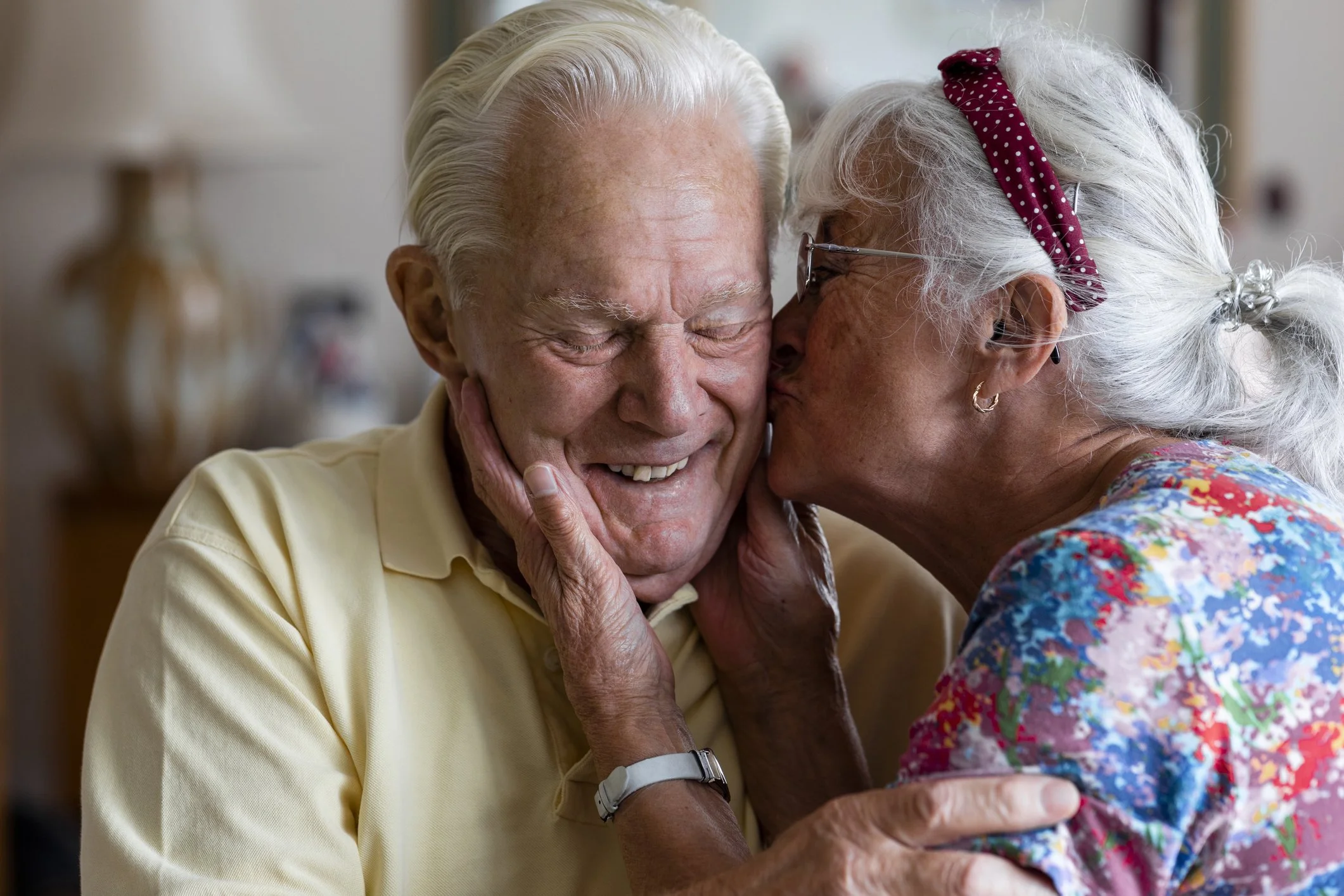
Families often notice a sense of ease in their loved ones after moving to Highview, making a meaningful difference not just for the couple, but for the entire family. “It’s not just about being in the same place — it’s about the sense of security that comes with being together,” says Joy Birch, President. It also helps that Highview specializes in dementia care and understands the nuances of how a couple might need to be supported. “One spouse might have dementia, while the other has mobility challenges, Parkinson’s, or general frailty. Together, they are an intact and inseparable unit. Apart, they can be lost and heartbroken.”
A Story of Reconnection
Liz Shantz saw firsthand the importance of keeping couples together. Her cousin, Audrey, and Audrey’s husband, Ross, both had dementia. As their substitute decision-maker, Liz worked to ensure they both received the best care possible at Highview Kitchener, but not until after they became separated as a result of their dementia.“Audrey has the dementia with forgetfulness,” Liz explains. “Ross had the dementia with ‘I don’t trust a soul.’ He was very paranoid, which caused a lot of troubles.” When Ross was hospitalized with heart issues, Audrey struggled without him.“She would come into the room in the middle of the night and ask where Ross was, forgetting that he was in the hospital,” Liz says.Even after Ross returned home, their challenges persisted. They forgot to take their medication, to eat, and to maintain their daily routines.Recognizing that it was no longer safe for them to live at home, Liz and other family members moved them to Highview Kitchener. Ross initially struggled with the transition, but the difference became clear once the couple was reunited at Highview.“Although they weren’t a lovey-dovey couple, they needed each other,” Liz says. “Ross needed Audrey for her eyes (he had poor vision), and she needed him for the support. It was such a relief to know that they were cared for and that they were together.”
The Highview Difference
For many couples, staying together makes them feel whole, even if they can’t always express it. Whether it’s a lifelong commitment to their wedding vows or simply the comfort of knowing their partner is near, the emotional and mental benefits of staying together are undeniable.Unlike traditional long-term care homes, where reunification can take years, Highview offers a faster, more compassionate alternative. Both spouses don’t need to have dementia to live at Highview—if one has physical disabilities or requires extra support, they can still remain together in a secure, specialized home.
A Better Option for Families
If you’re facing the difficult decision to move a loved one to a dementia care home, Highview will prioritize keeping couples together, ensuring they receive the care they need without losing each other.Contact Highview Residences today to learn how your loved ones can stay together in a safe, supportive environment.
References:
Alzheimer Society of Canada. (2022). Navigating the path forward for dementia in Canada: The Landmark Study Report #1. https://alzheimer.ca/en/research/reports-dementia/navigating-path-forward-landmark-report-1Delorey, R. (2020, February 28). Keeping couples together in long-term care. Government of Nova Scotia. https://news.novascotia.ca/en/2020/02/28/keeping-couples-together-long-term-care
Get the Support You Need
If your loved one shows signs that additional care is needed, you are not alone. Highview Residences provides compassionate, specialized care that supports individuals and their families through the progression of dementia.